
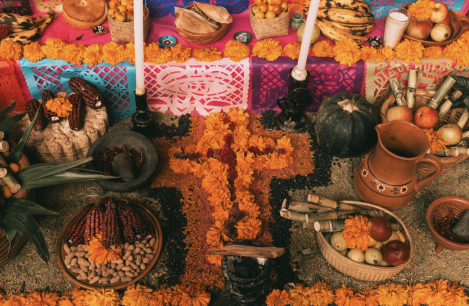
Every year on November 1 and 2, families across Mexico, Central America, and many Latino communities in the United States set a table for people who are no longer here. They don’t do it out of sadness. They do it to remember, to welcome, and to share a meal across the distance.
Food is at the heart of that tradition. More than just something to eat, it represents memories, family connections, cultural heritage, and the flavors that make certain moments unforgettable.
The dishes aren’t decoration or a theme. Each one is chosen with care, whether for its symbolism, its regional roots, or simply because it was someone’s favorite. This guide walks through the foods most closely tied to Día de los Muertos and what they represent.
Día de los Muertos, or Day of the Dead, is a holiday for honoring loved ones who have died. It’s celebrated in Mexico, Central America, and by many Latinos in the United States, and many of its traditional elements likely have roots in Mexican and Central American Indigenous practices.
It’s often misunderstood as a “Mexican Halloween,” but the two have little in common.
Día de los Muertos is a warm, family-centered remembrance. People tell stories, look through photographs, visit cemeteries, and build altars. Dates and customs vary by community, but November 1 and 2 are the most widely observed days.
The centerpiece of the holiday is the ofrenda, which means “offering.” This is the altar families build in their homes or at gravesides, layered with photographs, candles, flowers, and food. Families often place their loved ones’ favorite dishes, drinks, and treats on the altar as a way to welcome and remember them.
The idea is simple and moving: the spirits are believed to return to visit, and after a long journey, they should find something familiar waiting.
If one food defines the holiday, it’s pan de muerto, literally “bread of the dead.” This sweet, lightly orange-scented loaf is baked in the weeks leading up to November and is topped with bone-shaped pieces of dough. It’s both eaten by the living and placed on the ofrenda. It’s described as baked specifically for Day of the Dead, for altars and graves.
Where the bread comes from is a topic of friendly debate.
Some historians point to Spanish breads baked for All Saints’ observances, while some Mexican institutions credit pre-Hispanic ritual foods. Either way, it has become one of the most recognizable symbols of the holiday.
Mole, the rich, complex sauce built from chiles, spices, nuts, and sometimes chocolate, is a common offering on many ofrendas. Its depth of flavor and careful preparation make it a dish often associated with celebrations and gatherings, which makes it a natural fit for a holiday about family and remembrance.
Mole is also a flavor worth enjoying beyond special occasions. Cantina Latina celebrates this beloved culinary tradition with its Chicken Mole Burrito Bowl, bringing together mole-inspired flavor and the convenience of a ready-to-eat meal. It’s one way to explore a classic Latin flavor in a modern, everyday format.
Tamales, made of corn masa filled with meat, cheese, vegetables, or even something sweet, then steamed in corn husks or banana leaves, appear on many ofrendas and family tables. They’re a dish made for sharing, often prepared in large batches by several generations working together. Fillings vary widely by region, including tamales filled with mole.
Warm drinks are an important part of the holiday, especially during evening vigils. Atole is a hot, corn-based drink often flavored with cinnamon, while champurrado is a thicker version enriched with chocolate. Café de olla, spiced coffee, is another common choice.
This is pumpkin or squash slowly simmered in a syrup of piloncillo (unrefined cane sugar) and cinnamon until tender. It’s a beloved seasonal preparation that reflects the importance of locally available ingredients and traditional cooking methods.
Fruit is a simple but meaningful offering. Oranges, apples, and other seasonal fruits are often included on ofrendas, adding color, fragrance, and a touch of nature to the altar.
Sugar skulls, or calaveras, are probably the most recognizable image of the holiday. They’re typically decorative rather than meant to be eaten, often decorated with a loved one’s name and placed on the ofrenda to represent the departed.
There’s no single “correct” Día de los Muertos menu. In Michoacán, altar breads may be shaped like people, animals, or flowers. In Puebla, pan de muerto is often topped with sesame seeds, and in Oaxaca, altars may include local specialties like pan de yema, chocolate, and mezcal.
What goes on any ofrenda depends on the family, the region, and the person being remembered.
That same diversity is what makes Latin American cuisine so exciting. From the rich sauces and spices of Mexico to the distinctive ingredients and cooking traditions found throughout Central and South America, every region has its own culinary identity.
It’s this spirit of exploration that inspires Cantina Latina. The burrito bowls bring together Latin-inspired ingredients and flavors in convenient meals that make it easy to discover something delicious, whether you’re already familiar with these cuisines or trying something new.
If you’d like to take part in Día de los Muertos food traditions, a few thoughtful steps go a long way:
● Learn the meaning first. Understanding why each element is included makes participating more respectful and more rewarding.
● Make or buy pan de muerto from a local bakery. Many panaderías sell it only in the weeks before the holiday, and supporting them keeps the tradition alive.
● Choose foods that mean something. If you’re honoring someone, make their favorite dish rather than a generic spread.
● Share the meal. The food on the ofrenda is meant to bring people together, so invite family and friends to remember alongside you.
● Avoid treating it as a costume party. It’s a remembrance, so approach it with the same care you’d bring to any cultural or religious observance.
For many families, the flavors of Día de los Muertos aren’t limited to one weekend. Mole and slow-cooked comfort dishes are part of year-round celebrations and everyday cooking. If you’d like to taste that tradition without the hours of prep, Cantina Latina’s Chicken Mole Burrito Bowl is inspired by the same mole tradition, ready to eat any day of the week.
You can also explore the full burrito bowl lineup.
We're Live! Serving up bold Latin flavors, made for busy lifestyles!